

Autism Spectrum Disorder Care at TP Health
If you’re reading this because you’ve noticed something different about how your child talks, plays, or connects with people around them, you’re probably carrying a mix of worry. And a hundred unanswered questions. That’s normal. Autism doesn’t come with one clear sign. There’s no simple checklist. It shows up differently in every child, and even experienced parents can find it hard to tell what they’re actually looking at.
At TP Health in Missouri City, our child psychiatry team works through this uncertainty with families every week. We don’t hand you a label and move on. We sit with your child. We sit with you. We build a plan around what your kid actually needs.
Recognizing the Signs of Autism
Signs usually show up early. Often before age three. But “early” doesn’t mean “obvious.” Some kids show clear signs as infants. They avoid eye contact. They don’t respond to their name. They seem uninterested in people.
Other kids develop normally for a year or two. Then they lose words or skills they already had. Parents describe this regression a lot. It’s real. It’s worth taking seriously.
The Autism Spectrum Disorder signs generally fall into two groups.
Social and communication signs:
- Delayed speech, or speech that sounds flat or robotic
- Trouble starting or holding a conversation
- Not pointing at things to share interest
- Missing facial expressions and body language cues
Repetitive behaviors:
- Hand-flapping, rocking, or spinning
- Getting fixated on parts of objects, like the wheels on a toy rather than the toy itself
- Strong resistance to small changes in routine
- Unusual sensitivity to sound, light, or texture
No child hits every point on this list. Severity varies a lot. Some kids with autism have real learning challenges. Others are sharp and verbal but still miss the social rules most kids just absorb. That range is exactly why a real evaluation beats matching your child against a checklist online.

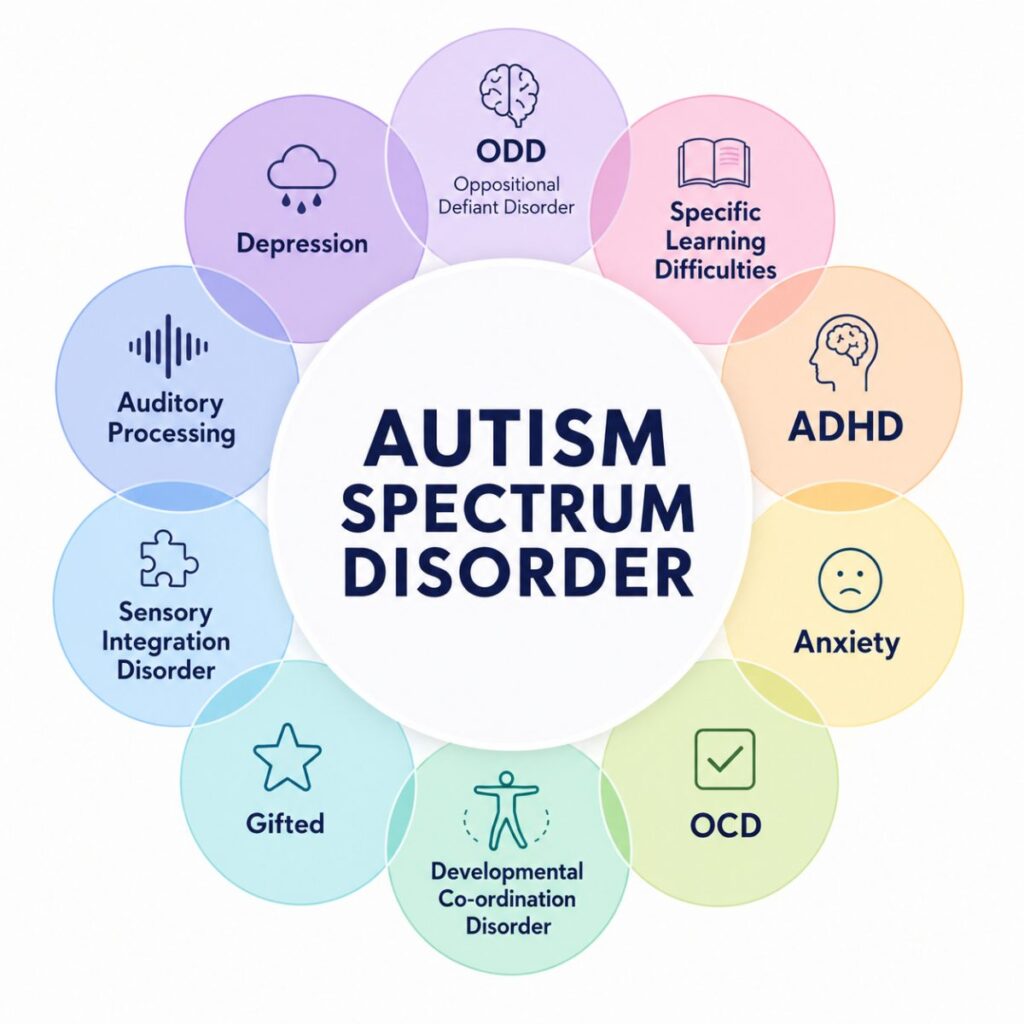
Autism Isn't One Thing
Here’s something we tell parents constantly: don’t chase a diagnosis before you understand the full picture. Autism overlaps with other conditions a lot, especially ADHD. Pulling those threads apart takes time and real clinical judgment, not a quick checklist.
This trips up a lot of families. ADHD and autism can look similar on the surface. Both can cause social struggles at school, but the reason is different.
A kid with ADHD might struggle socially because they’re impulsive or distracted, not because they don’t understand social cues. A kid with autism might understand that a social cue is happening. They just don’t know what it means.
That distinction changes everything about treatment. We’d rather take the time to get it right than slap a label on your child fast.
Why Early Support Actually Matters
There’s no cure for autism. We won’t pretend otherwise. But early support changes outcomes. Kids who get help during preschool years tend to build stronger communication and social skills. Kids who start later often catch up more slowly. That doesn’t mean it’s ever too late. It means earlier is better, and waiting rarely helps.
That’s why we push for evaluation as soon as a parent has a real concern, not after months of watching and waiting alone.


What Autism Care at TP Health Looks Like
You don’t need to figure this out on your own, and you shouldn’t have to. Here’s what actually happens when you bring your child in to TP Health Clinic:
- A full developmental and behavioral evaluation, done by a child psychiatrist, not a form
- Primary care plan built around your child’s specific mix of strengths and challenges
- Ongoing support for communication and social skills
- Practical strategies for behavior and emotional regulation at home
- Regular monitoring so the plan grows with your child
- Direct guidance for your family, because you’re the one living this daily
- Coordination with other specialists when your child needs more than psychiatry
No two care plans here look the same. Because no two kids are the same. That’s the whole point of starting with an evaluation instead of a guess.
Autism Care FAQs
Delayed or unusual speech. Limited eye contact. Not responding to their name. Repetitive movements like hand-flapping or rocking. Some kids are also sensitive to sounds, lights, or textures. One behavior isn’t a pattern. Several things together are worth mentioning to a psychiatrist.
Yes. More often than most parents expect. The two can look alike from the outside. But the reasons behind the behavior differ. That’s why a real evaluation beats a symptom checklist.
No. We won’t tell you otherwise. What helps is early, consistent support. Many kids make real progress in communication, behavior, and daily function with the right care. Even without a cure.
If you’re seeing developmental delays, social struggles, or repetitive behaviors affecting daily life, that’s the time. Waiting rarely brings more clarity. It usually just delays the support your kid could already be getting.
Take the First Step
You don’t need a finished diagnosis to reach out. You just need a real concern. Our child psychiatry team at TP Health in Missouri City works with families across Sugar Land and the Greater Houston area, and we’ll walk through this with you at your pace, with a plan built for your kid.
Who is this appointment for?
Please enter the patient's name to continue.
