
See a primary care doctor for regular preventive visits, new symptoms, symptoms that won’t go away, and ongoing conditions. Also go for follow-up after urgent care or a hospital stay. If your symptoms could be life-threatening, call 911.
Most people only look for a doctor when they feel bad. By then, you’re worried, short on time, and picking a name from a list. It’s easier to find a primary care doctor in Missouri City, TX while you feel fine. Then you already know who to call when something comes up.
This guide covers when to book, which signs to take seriously, what a visit looks like, and who to see first when you’re not sure.
What a Primary Care Doctor Does
A primary care doctor is often the first healthcare professional you turn to for routine care, new concerns, and ongoing health needs. They also help you decide when a specialist is the right next step.
At TP Health, primary care is provided by family medicine providers who see patients of many ages. They help with:
- Wellness exams, screenings, and vaccines
- Colds, infections, and minor injuries
- Long-term conditions like diabetes, high blood pressure, and asthma
- Referrals to specialists when needed
The real value is that someone knows you. They know your history, your medicines, and what’s normal for you.
When Should You See a Primary Care Doctor?
You don’t have to be sick. Book a visit when:
- It’s time for a preventive visit or wellness exam
- You have a new symptom that worries you
- A symptom has lasted longer than it should
- You need a medicine refill or review
- You have a long-term condition to manage
- You were at urgent care or the hospital and need follow-up
- You need a form for school, sports, or work
- You’re new to the area and want a doctor before you need one
Signs You Shouldn’t Ignore
Many people wait too long because a symptom seems small. See your doctor if you notice:
- Tiredness that rest doesn’t fix
- Weight change you can’t explain
- Pain that keeps coming back
- A cough or fever that isn’t getting better
- Dizziness that happens more than once
- High blood pressure or blood sugar readings
- Poor sleep for weeks
- Feeling low, anxious, or overwhelmed for a long time
That last one counts too. Mental health is part of your health, and your primary care provider can talk it through with you. These signs don’t mean something serious is wrong. They mean it’s worth checking.
How Often Should You See a Primary Care Doctor?
There’s no one answer for everyone. Many adults benefit from regular preventive visits. Your schedule depends on your age, health history, risk factors, and your doctor’s advice.
- If you’re generally healthy: Regular preventive visits. Your doctor sets the timing.
- If you have a long-term condition: More frequent visits, based on your care plan.
- If you have new or lasting symptoms: See your doctor soon.
- After urgent care or the hospital: Book a follow-up visit.
A visit is also a good time to ask about preventive care, screenings, and immunizations.
What Happens During a Primary Care Visit?
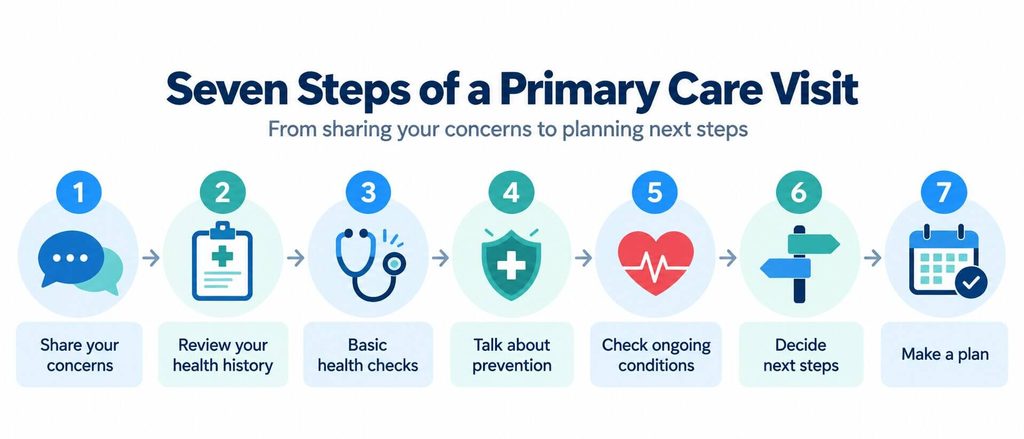
If you haven’t been in a while, it helps to know what to expect. A typical visit goes like this:
- You share why you came. This could be a checkup, a symptom, or a question.
- Your provider reviews your history. That includes past conditions, family history, and the medicines you take.
- Basic health checks. This often includes things like blood pressure and weight.
- A conversation about prevention. You may talk about screenings, vaccines, sleep, stress, and daily habits.
- A check on any ongoing conditions. Your provider looks at how your treatment is working.
- A decision on next steps. Your provider may suggest tests or a specialist referral if needed.
- A plan. You leave knowing what to do next and when to come back.
You don’t need to have everything figured out. Your provider will guide the visit.
Not Sure Who to See First? Start Here
Many people don’t know if they need a specialist. In most cases, starting with primary care works well. Your provider can look at the full picture and refer you if needed.
| What’s going on | Start with | May be referred to |
| General checkup, new symptoms, or you’re unsure | Primary care | Any specialty |
| Blood pressure, heart concerns, or high cholesterol | Primary care | Cardiology |
| Headaches that keep returning, numbness, or memory concerns | Primary care | Neurology |
| Constant worry, low mood, or trouble focusing | Primary care, or go straight to mental health care | Psychiatry or Therapy |
| Weight management | Primary care | Weight loss care |
TP Health offers these services in one clinic. Your care stays coordinated across services, with aligned medical records, so you don’t have to repeat your story at every office.
Primary Care vs. Urgent Care vs. ER
Primary Care
Primary care is for checkups, ongoing care, and symptoms that aren’t an emergency. Your provider knows your history, so the care is more personal and easier to follow over time. Common reasons to go include wellness exams, managing long-term conditions like high blood pressure or diabetes, colds and infections, medicine refills, and follow-up after urgent care or the hospital.
Urgent Care
Urgent care is for when you need help fast and can’t get in to see your doctor. It’s for problems that need attention soon but aren’t life-threatening. A sprain, a minor cut, a fever or sore throat that came on quickly, or a mild injury after a fall are common examples. Urgent care works well for one-time problems, but it doesn’t replace a doctor who knows your full health history. If you go, let your primary care provider know so they can follow up.
The ER or 911
The ER or 911 is for severe or possibly life-threatening symptoms. These need care right away. Don’t wait, and don’t drive yourself if you feel very unwell. Call 911 for chest pain or pressure, trouble breathing, signs of a stroke (face drooping, arm weakness, or slurred speech), severe bleeding, fainting, a sudden, severe headache that is unusual for you, or a serious injury.
If you think your symptoms could be life-threatening, don’t wait for a clinic appointment. Call 911 or seek emergency care.
How to Get the Most Out of Your Visit
A few minutes of prep makes a big difference. Bring:
- Your photo ID and insurance card
- A list of your medicines, vitamins, and supplements
- Past test results, if you have them
- Home blood pressure or blood sugar readings, if you track them
- Your questions, written down
For any symptom, tell your doctor three things: when it started, what makes it better or worse, and how it affects your sleep, work, or mood. That helps more than a long story. Before you leave, ask: “What should I watch for before my next visit?”
Why Choose Primary Care in Missouri City, TX?

If you live in Missouri City or nearby, having primary care close to home makes routine visits and follow-ups easier to keep. You’re more likely to stay on track when the clinic is nearby.
At TP Health, you also get:
- One team, many specialties. If you need another TP Health provider, your primary care provider can help coordinate the next step.
- Telehealth. Some follow-ups and non-urgent visits can be done by video.
- A local clinic on Riverstone Blvd. Easy to reach from across Missouri City.
Learn more about our primary care services.
What Our Patients Say About Us
Don’t just take our word for it. Here is what patients have shared about their visits to TP Health.
“I had a very positive experience at TP Health Clinic. The staff was welcoming, the office was clean, and the provider took the time to explain everything clearly. I felt comfortable throughout the visit.”
Sophia T.
“TP Health Clinic was excellent from start to finish. Check-in was smooth, everyone was professional, and the provider was thorough and attentive. I would definitely recommend this clinic.”
James W.
“The moment I stepped in the door I was greeted warmly and the appointment went very smoothly.”
Cody B.
Book a Primary Care Visit at TP Health
If you’re looking for primary care in Missouri City, TP Health can help you choose the right type of visit for your needs. Request an appointment online or call the clinic to get started.
TP Health Clinic
4810 Riverstone Blvd, Suite 100
Missouri City, TX 77459
Phone: (832) 916-2677
Book a primary care visit
TP Health offers same-day appointments. Availability can change, so call to check. Prefer a video visit? See our telehealth services.
This article is for general information. It isn’t medical advice. Talk with your healthcare provider about your own health.
FAQs
1. Do I need a primary care doctor if I feel healthy?
It helps. Preventive visits can catch problems early. They also give your doctor a baseline for what’s normal for you.
2. How often should I get a checkup?
It depends on your age, health history, and risk factors. Your provider will suggest a schedule that fits you.
3. Can I see a specialist without a primary care doctor?
Sometimes. It depends on your insurance plan, since some plans require a referral. A primary care doctor can also help you choose the right specialist.
4. Is primary care the same as family medicine?
They’re closely related. At TP Health, primary care is provided by family medicine providers who see many age groups.
5. Is TP Health accepting new primary care patients?
Yes. The clinic’s primary care providers are listed as accepting new patients. Request an appointment online or call (832) 916-2677.
6. What if my symptoms are an emergency?
Call 911 or go to the nearest emergency room. Don’t wait for a clinic appointment.
